Most leaders I meet care deeply about what they're building. They can tell you exactly why their organisation exists, who it serves, and sometimes also describe what kind of organisation they refuse to become.

And yet, most of them are one bad year, one board change, one major donor with strings attached, or one acquisition offer away from losing control of everything they built.

And it's not because they stopped caring, but rather the structure of their organisation was never built to protect what they care about.
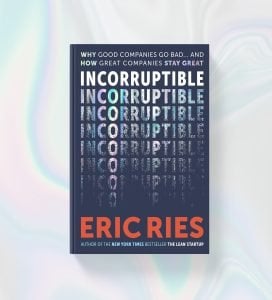 After listening to Eric Ries talk about his new book Incorruptible on Lenny Rachitsky’s podcast, I couldn’t stop thinking about how much of this applies to every kind of organisation. Eric is the author of The Lean Startup and has spent two decades working with founders, CEOs and investors. His conclusion is confronting: good intentions are not enough. The way most organisations are legally and financially built creates a structural pressure that, over time, overrides intention.
He calls it financial gravity. It’s not greed or weak leadership. It’s a force built into standard governance that pulls every organisation toward short-term priorities, regardless of what the leader originally stood for. A force, as he puts it, that no one controls but everyone obeys.
What this actually looks like
We all know that feeling when you can taste that a restaurant has changed hands. The food is different and something about the experience is off. Not because anyone decided to make it worse (that would be crazy), but because the pressure to cut costs and extract short-term returns quietly reshaped every small decision upstream, until the thing that made it worth going to was gone.
The same pattern plays out in organisations of every kind. It rarely arrives as a dramatic moment. It comes as a new board member with different priorities. A major funder whose values don’t quite align with yours. A growth phase that slowly shifts what the organisation optimises for. An acquisition offer the board feels obligated to accept.
Philip Morris acquired Vectura, a respiratory health company. Within three years, the purpose that made it meaningful was gone. Not through malice. Through structure.
Most corporate charters state that an organisation exists to pursue “any lawful activity.” In practice, that means maximising financial returns. Under that framework, boards can become obligated to accept the highest offer on the table, even harmful ones. This form of shareholder primacy has only dominated for around 40 years. It is not natural law. But right now, it is the default. And the default has consequences.
In our work on brand drift, we see this playing out at a cultural level constantly. Purpose erodes not through one bad decision but through the accumulated weight of small compromises. Eric is making the same argument at the level of governance. The mechanism is different. The outcome is the same.
Anthropic said no to the Pentagon
You may have seen the recent news that Anthropic declined a significant contract with the US Department of Defense. Whatever your view on that decision, what interests me is that they were structurally able to make it.
Anthropic’s governance was built with mission protection from day one. Independent AI safety oversight sits inside their structure with no financial incentive to approve decisions that compromise their purpose. That’s not a values statement, it was baked right into their business architecture. And it’s what allowed them to walk away from something most organisations, under normal governance, would have felt enormous pressure to accept.
Most organisations don’t have that protection. Most are one difficult conversation away from a decision being made for them.
Structure is what allows you to act on what you believe
Cloudflare gave away SSL certificates for free, even though SSL was their top conversion driver. Short-term, conversion dropped. Long-term, top-of-funnel grew tenfold. They are now a $70 billion company.
The principled decision always looks wrong on a short-term spreadsheet. That is not a reason to avoid it. It is a reason to build the structure that allows you to make it and hold it when the pressure pushes back. Values statements don’t do that. Governance does.
The window to act closes earlier than you think
At every stage of growth, leaders are told it is not the right time to put protective governance in place. Early on, it feels premature. Later, it feels complicated. By the time it matters most, the people with the power to block it are already in the room.
The most important step Eric outlines is becoming a Public Benefit Corporation, a legal structure that embeds your purpose directly into your founding documents. It’s a US-specific mechanism, but the principle applies everywhere, and in Australia, B Corp certification is the closest and most rigorous equivalent.
As a certified B Corp ourselves, we can tell you this is not about getting a badge. The certification process is demanding. It holds your organisation to account across governance, workers, community, and environment, and requires you to embed your purpose into your legal structure as part of it. That’s the point. This is far more than a statement of intent, but it’s a boundary that holds when the pressure comes, legally protecting you to act in accordance with your mission even when the market, your board, or your investors push back.
Most organisations never get there. Not because they don’t care, but because they keep waiting for the right time. And the right time, as Eric makes clear, is always earlier than you think.
Beyond that, Eric recommends a director’s oath tied to mission, and mission-protective provisions embedded in governance structure. Together, these form what he calls governance armour. They do not change who you are. They protect who you are when things get hard. And things always get hard.
We help organisations get clear on purpose and build brands that genuinely reflect who they are. That work matters. But clarity without structural protection is fragile. If the architecture of your organisation can override your intentions, purpose becomes something you can only afford when everything is going well.
If you are building something you care about, Incorruptible is worth your time. And read Does Your Brand Mean Anything? alongside it. Two different angles on the same question: what does it actually take to build something that holds?